
Cigar cutter types and when to use each
Short answer: A straight cutter slices the cap, a V-cutter cuts a channel, and a punch makes a round hole. Choose a straight cutter for a tapered head, a punch for a small opening on a rounded cap, or a V-cut when you want a channel with the surrounding cap intact.
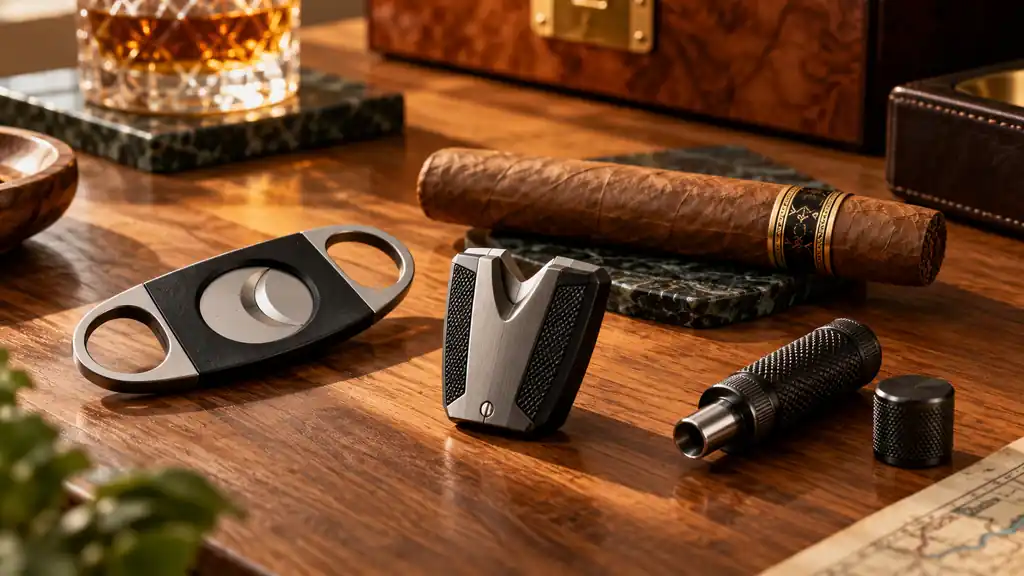
Straight cut, V-cut, punch, or scissors?
Choose the opening and head shape first. No tool makes every cigar better, and a tighter opening is not automatically a better draw. Start with a sharp cutter that fits the cigar's ring gauge.
| Tool | Opening | Useful when | Main limitation |
|---|---|---|---|
| Straight / double guillotine | A slice across the cap | You want a flexible first cutter, including gradual cuts on tapered heads | Cutting below the cap can let the wrapper unravel |
| V-cutter | A wedge-shaped channel | You prefer preserving the surrounding cap; check the tool fits the head | Fixed depth and head shape can limit the opening |
| Punch | A small circular hole | You want a compact tool for a rounded head | A small hole can restrict the draw; poorly suited to pointed heads |
| Cigar scissors | An opening across the cap | You want an open blade design and can control the cut | Needs steady alignment; ordinary household scissors are unsuitable |
How to use a straight cutter
A double-guillotine cutter closes two blades toward each other. Place only the tip of the cap inside the opening and remove a small amount with one controlled motion. Stay above the shoulder, where the rounded head starts to straighten into the body. You can remove a little more if needed; you cannot replace a cap cut too deeply.
For a Torpedo or other tapered head, start especially small and increase the opening gradually. The Torpedo vitola guide explains why the tapered head gives you room to adjust.
V-cut vs. straight cut
Use a V-cutter when you want a channel through the cap while leaving the surrounding cap in place. It can be useful on a rounded head or larger ring gauge if the tool fits. Use a straight cutter when you want more control over how much of the tip to remove, especially on a tapered head.
How to V-cut a cigar
Seat the head gently against the cutter's guide and make one clean cut. Do not force a large cigar into a small cutter or assume every V-cutter suits every pointed cigar. Blade depth and head geometry vary. A second crossing cut removes more material and is harder to reverse, so try one cut first.
Cigar punch vs. straight cutter
A punch removes a circular plug rather than a slice or wedge. It is compact and preserves most of a rounded cap, but the smaller opening can feel restrictive. A pointed head usually gives it too little flat surface to seat cleanly.
If you want one cutter for both rounded and tapered cigars, start with a straight cutter sized for your widest cigar. If you mostly smoke rounded cigars and prefer a smaller opening, a punch is a practical second tool. The ring-gauge calculator converts the size on the box to diameter.
Choose a punch diameter suited to the head. Place it squarely, apply light pressure with a gentle turning motion, and lift the plug out. Stop if the wrapper begins to split. If the draw is tight, check the opening and the cigar rather than repeatedly drilling holes into the cap.
Cigar scissors vs a guillotine cutter
Purpose-built cigar scissors have curved cutting edges designed for cigar heads. Their open design gives you a clear view of placement and can accommodate a range of sizes. They require more control to keep the blades square and avoid pulling the wrapper sideways.
A sharp double-guillotine cutter is usually a simpler starting point. Ordinary desk or kitchen scissors can crush or tear the cap and should not be treated as a substitute for cigar scissors.
How much of the cigar cap should you cut?
Remove enough to open the draw while preserving the cap seam. There is no universal cut depth because caps and head shapes differ. Inspect the head before cutting, take a small first cut, and avoid cutting into the straight body of the cigar.
Why did the wrapper crack or the draw stay tight?
- Cracked cap: check blade sharpness, tool capacity, and whether you cut below the shoulder. Dry storage can also make wrappers brittle; review humidor troubleshooting.
- Tight opening: a punch or shallow V may leave less open area. Check the cap before enlarging it.
- Tight cigar: construction or excess moisture can restrict airflow too. Removing more cap will not necessarily solve either problem.
Which cutter should a beginner choose?
A sharp double-guillotine straight cutter is a flexible first choice. Check the opening capacity, alignment, and ease of cleaning before decorative materials. Once you know your preferred shapes and draw, a punch, V-cutter, or cigar scissors can be a useful second tool.
After cutting, follow our step-by-step lighting and smoking guide. Keep blades clean and follow the tool manufacturer's maintenance instructions.
Reference: Cigar Aficionado’s guide to cutting a cigar.
Cigar Path does not sell tobacco or publish cigar reviews. This guide is for adults of legal tobacco-purchase age.